10 Espresso Machines Tricks Experts Recommend


Espresso Machines - The Best Espresso Makers in the UK
Espresso machines are the ideal way to get the ultimate coffee experience. They're a labour of love but allow you to control every aspect of your coffee.
They usually include an espresso tamper to flatten the grinds and steamer to froth the milk for lattes and cappuccinos.
1. Stovetop
There are approximately 98 million cups of coffee consumed in the UK every day and we have a fantastic range of stovetop espresso makers to help you make the perfect cup of coffee. These machines, also referred to as moka pots use pressure to produce an espresso-like cup of coffee without the hassle of filter papers. These simple and easy to use appliances will enhance any coffee and can also be used with milk to make lattes or cappuccinos.
Moka pots have a bottom chamber which is filled with water while the coffee grounds are placed in a basket in between two pipes which lead to the upper chamber where the finished beverage is served. When the water is boiling in the bottom, it forces itself through the grounds under high pressure and seeps up into the upper chamber, where the aromas are released for you to enjoy. The end result is a fragrant, rich and strong coffee that is delicious by itself or paired with sugar and milk.
The most important thing to keep in mind when buying a moka pot is the capacity of the pot. It is important that you check the dimensions of the bottom as well as the capacity of the basket. A larger unit might require a longer waiting time, while smaller ones may not be capable of building up enough pressure. We also suggest looking at the material that the machine is made from since stainless steel machines are stronger and more durable, however they come with a higher cost.
You should also think about whether the appliance is compatible with the heating source, whether electric or gas. Additionally, you might consider looking into any additional add-ons available like steamer arms for milk that can be used to heat and foam milk in cappuccinos and lattes. You may also want to look at the number of cups that you can make at once in order to be a useful factor in selecting the right size for your needs.
Lastly, we would recommend checking that the moka pot you're considering has a wide enough base to fit on your chosen burner. We found that some models, such as the Stelton collar espresso maker had a base that was narrow and were difficult to put in the proper spot on a gas burner. However, wider bases, like those of the Bialetti Venus and the London Sip stovetop espresso makers, produced better results. We also preferred models that had thicker walls, as this was found to transfer heat more efficiently and stop it from sputtering out too fast.
2. Capsule
There are also capsule coffee machines, that make use of pods to create cappuccinos, espressos, etc. If you're not a fan of messing with grounds, cleaning, and making coffee, this is the perfect alternative for you.
You'll need purchase the coffee pods separately. There are many brands to choose from, including Nespresso Dolce Gusto, and Tassimo. There are also a few different sizes to choose from to allow you to tailor the size of your cup and the type of coffee to your own preference. The smallest model is the Nespresso Essenza Mini, which is ideal for small areas and makes one cup at one time. You can also get a larger model that can handle larger cups, but they're more expensive.
For a more sophisticated option that also yields better tasting coffee it is recommended to use the Illy Iperespresso is a stylish alternative for coffee lovers. It's not the cheapest machine, but it makes an excellent cup of coffee. It's also easy to use. It also has an intelligent feature that allows it to recognize the brand of pod it's using and automatically adjusts its settings accordingly it, making it among the most versatile machines in our opinion.
If you're interested in exploring the wide range of drinks you can prepare with a pod coffee machine, it's worth looking for a model with a milk carafe. This lets you play with cappuccinos, lattes, and a variety of other drinks. You can still make the most well-known drinks with a capsule machine without a milk cup, but it'll be more than a hit and miss affair.
If you're thinking of buying capsule coffee machines be sure that it's listed as compatible with ESE pods. This typically means it comes with a basket, or adapter that can be used to accommodate smaller pods. Some of our machines we offer have this feature, which means you can use them with Nespresso compatible pods as well as Dolce Gusto or Tassimo pods.
3. Manual
As the name suggests these are manual espresso machines intended for those who are a bit more strict. They look like the original espresso machine created in Italy in the early 1900s. They are operated by pumping the water manually into a filter, then locking it, and then forcing the water under 9 bar of pressure to make a shot.
Manual espresso makers are often more labor-intensive than capsule machines. It is necessary to heat the water separately, then pour it into the chamber above pre-ground coffee or pods and then press the lever or plunger down to create pressure and force the liquid into the cup. This method of operation can be messy, lengthy and a little frustrating to get right however the result is well worth the effort.
Some of the more modern models like the Flair 58 and the Sage The Barista Touch Impress have taken a different approach to make it easier to control, they have utilised an electronic temperature controller known as a PID (Proportional-Integral-Derivative). small espresso machine is a piece of technology that can be found in high-end immersion circulators and toasters, and is designed to stabilise the brew boiler temperature. This is a fantastic way to take away a lot of the uncertainty about the optimal temperature of brewing.
Rancilio, La Pavoni and other large names make manual espresso machines. The majority of people who have worked in a cafe or cafe will be familiar with these names. They manufacture the huge two or three group heads of commercial espresso machines that you find in a coffee shop however in 1997 they introduced the Silvia, which is an automated, semi-automatic machine that comes with some bells and whistles to help take some of the hassle out of the brewing process.
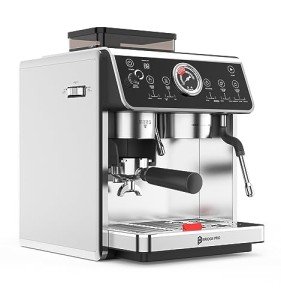
Fully Automatic espresso machines do all of the work for you, they grind the beans, tamp, pull shots and steam your milk too all at the push of a button, but they will also cost you an astronomical amount of money so you need to have an adequate balance in your bank to be in a position to afford one.
4. Semi-Automatic
If the thought of replicating an espresso shot from your favorite cafe at home strikes a chord and you want to replicate it, then a semi-automatic coffee machine is the right choice for you. These machines allow you to adjust your preferences over time and also adjust the amount of your espresso drink based on your mood at any given time.
These machines are outfitted with a portafilter and a steam wand. They have similar brewing processes to super automatics, however they require manual processes such as grinding the beans and inserting the portafilter. These machines require more skills and expertise to operate, as the brew cycle is not run in a way that is automated.
A semi-automatic machine that is good will have filters that can be removed and an tamper that compresses the coffee grounds inside the portafilter prior to making. It also lets you to manage the amount of water and pressure used during the brewing process. This means you can adjust your shots according to your personal preferences and the kind of coffee beans you are using.
Another thing to look out for in a semi-automatic coffee maker is an adjustable temperature control. This feature lets you set the brewing temperatures for your coffee beans according to the way they taste. It will also help you avoid temperature fluctuations which is particularly important for the boiler that brews the coffee. The brew temperature can fluctuate by as much as 20oF in a cup without a PID controller. The swing is reduced to 0.1oF with a PID.
Some of the top models come with a milk frother to make espresso drinks based on milk. This will allow you to make delicious lattes, cappuccinos and macchiatos. The frothing jug must be comfortable to hold and have an spout that makes pouring effortless.
It is also recommended to select an item with a filtering basket as well as an automated dosing system for grounds. You'll be able to not have to do the manual grinding and tamping yourself. This will make cleaning the machine simpler.